The threshold of 60 °C appears in very different contexts: preparing Japanese green tea, setting a hot water tank, preventing legionellosis. Achieving this temperature accurately presents a concrete problem. Water heater thermostats often display a nominal value that does not correspond to the actual temperature at the tap.
Heating water in a pot without a reliable reference is a matter of approximation. Several methods exist, from kitchen thermometers to simple household taps, but their reliability varies depending on the context of use.
Why 60 °C: the link between water temperature and health risk
Most online guides address temperature measurement from a culinary perspective. They overlook a health-related fact that justifies this specific threshold: 60 °C neutralizes Legionella bacteria within minutes. Below 50 °C, the risk of proliferation of Legionella pneumophila significantly increases in hot water systems.
The recommended range for a hot water tank is between 55 and 60 °C, specifically for hygiene reasons. A thermostat set to 60 °C does not guarantee that the water reaches this temperature at the point of use. Heat loss in the pipes, the distance between the tank and the tap, and the insulation of the network all affect the actual temperature of the water.
For anyone wishing to measure the water temperature with a minimum of rigor, checking at the point of use remains the only reliable approach. The number displayed on the water heater thermostat is just a setting, not a measurement.
Kitchen thermometer: the reference method for measuring 60 °C
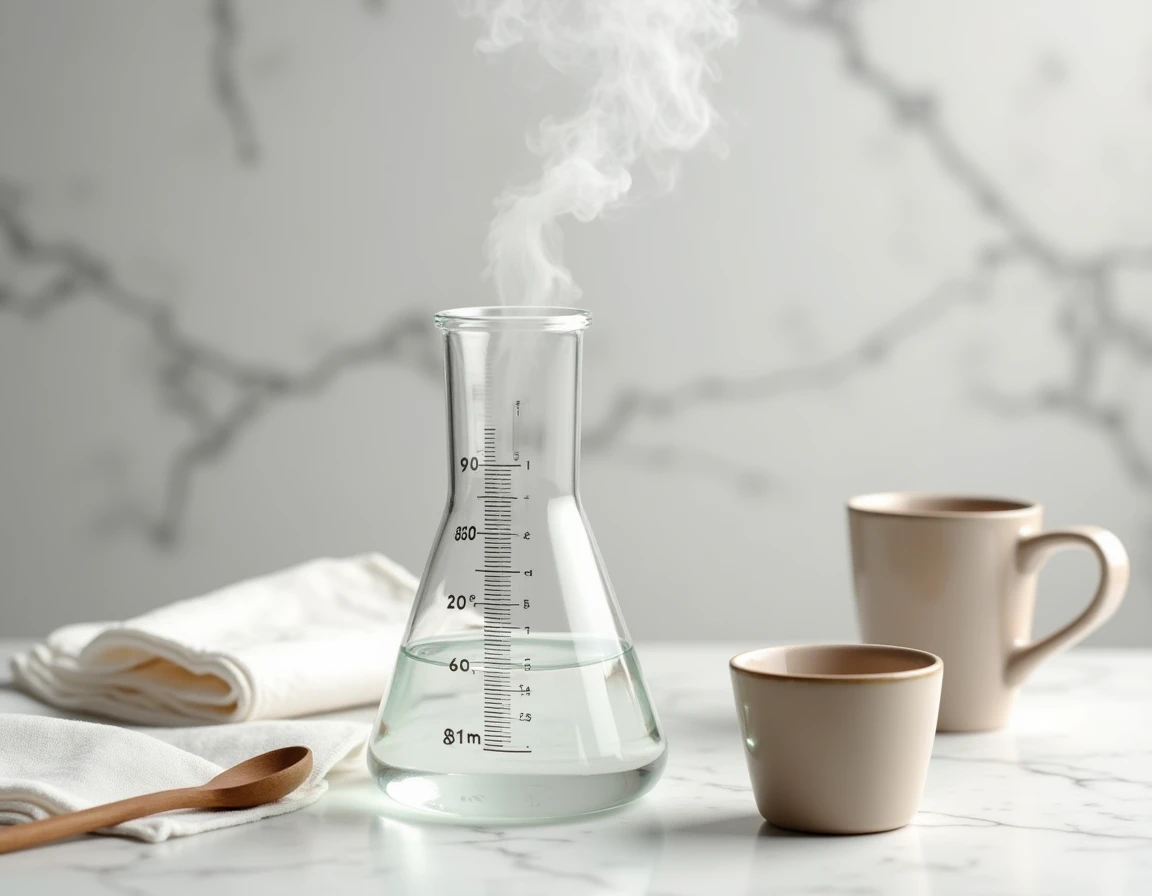
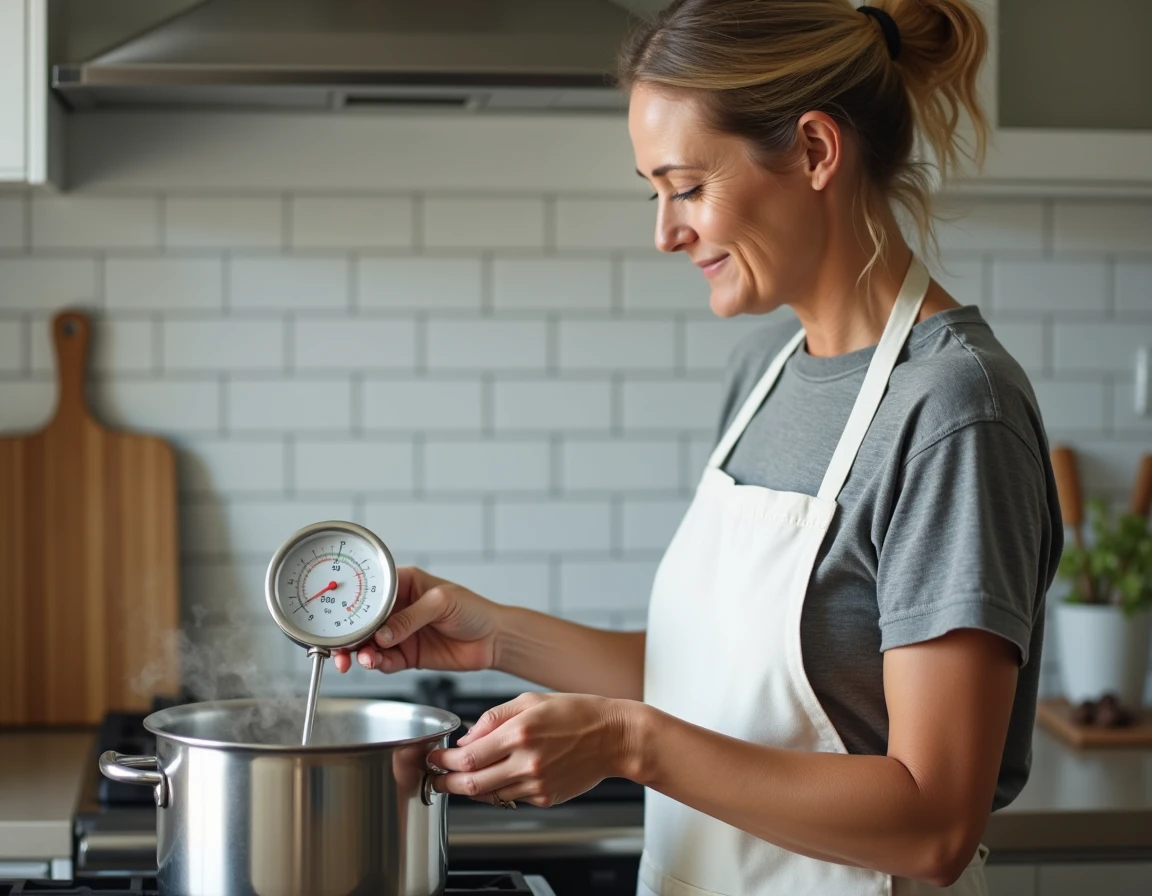
A digital probe thermometer remains the most accessible tool for direct measurement. Common models display the temperature within seconds with generally sufficient accuracy for domestic use.
Protocol for reliable measurement
- Immerse the probe in the center of the container, without touching the walls or the bottom, which may be hotter than the water itself
- Wait for the display to stabilize before reading the value, which rarely takes more than ten seconds with a digital thermometer
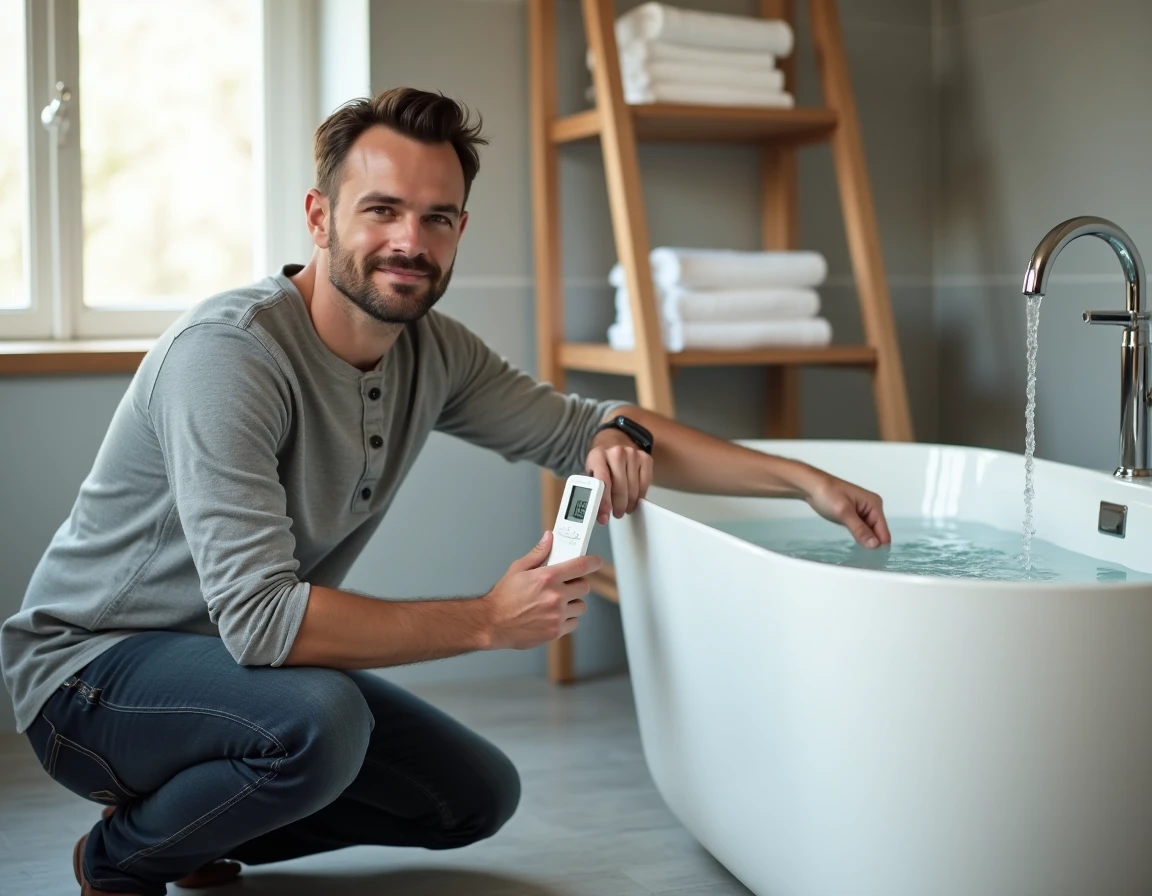
- For tap water, open the nearest hot water tap to the tank for about thirty seconds before measuring, to flush out the cooled water in the pipe
This last point is often overlooked. The first liters that come out of the tap have stagnated in the pipe, and their temperature does not reflect the setting of the water heater. Letting it run for 30 seconds before measuring significantly changes the result.
Limitations of the tool
A kitchen thermometer is not a calibrated instrument. Its accuracy depends on its quality and age. Low-cost models can drift by a few degrees after several years of use. For sanitary use (checking the temperature of the tank), this margin of error matters.
Home calibration by the boiling point method (immersing the probe in boiling water and checking that the display indicates around 100 °C) gives an indication, but local atmospheric pressure and altitude influence the actual boiling point. The available data do not allow for professional precision calibration with this method alone.
Checking at the tap: using the water heater as a calibrated source
A simple approach, rarely mentioned in cooking-oriented content, is to use the domestic hot water tank as a reference source. The principle: open the nearest hot water tap to the tank, let it run for about thirty seconds, then measure the temperature with a kitchen thermometer. If the reading deviates from the thermostat setting, adjust it and repeat.
This method requires no specialized equipment. It allows you to verify that the tank delivers water within the range of 55 to 60 °C at the point of use, which is both the health target and a useful reference for energy consumption. A tank set too high increases the electricity bill without real benefit.
Estimation without a thermometer: what visual cues really allow
When no measuring device is available, visual signs of water heating provide approximate references. The Japanese tea tradition describes several heating stages based on the size of bubbles and the sound produced by the water.
At around 60 °C, small bubbles begin to form at the bottom of the container, without rising to the surface continuously. The steam is barely visible. The sound remains discreet, well below the rumble that precedes boiling.
These cues have an obvious limitation: they depend on the container, the heat source, and the observer. In a steel pot on an induction plate, the first bubbles appear at a different stage than in a glass kettle on a gas flame. The margin of error easily exceeds five to ten degrees.
Another technique sometimes mentioned involves mixing boiling water and room temperature water in given proportions. In theory, one volume of cold water for one volume of boiling water gives an intermediate temperature. In practice, the exact temperature of tap water varies by season and region, making the calculation unreliable without a thermometer to verify the result.
What level of precision to aim for depending on the use
The acceptable tolerance entirely depends on the context. For infusing green tea, a five-degree error alters the taste but poses no risk. For setting a hot water tank, the margin is narrower: too low, bacterial proliferation becomes possible; too high, the risk of burns and energy consumption increases.
A digital thermometer covers both cases. Visual or mixing methods are only suitable for cooking, where approximation remains acceptable. For any installation related to heating or hot water production, instrumented measurement at the point of use remains the only credible verification.
The most useful reflex is also the simplest: keep a kitchen thermometer accessible and periodically check the temperature at the tap closest to the tank. This takes less than a minute and provides information on both health safety and the proper functioning of the device.