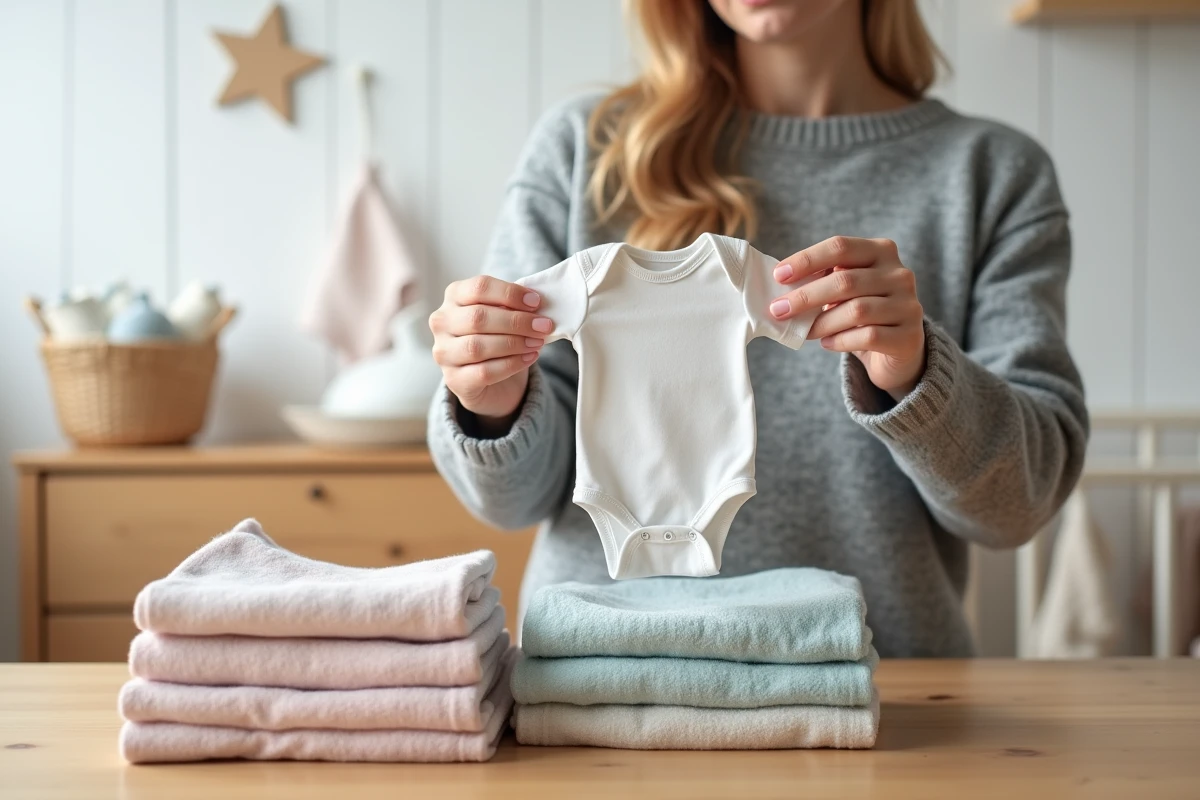
The sizes indicated on baby clothes rarely correspond to reality. A bodysuit labeled “1 month” may be too small right from the maternity ward for some newborns, while another may wear it for several weeks. This discrepancy between the label and the actual morphology of the infant leads many parents to accumulate pieces that are never used.
Size-weight correspondence: what the labels don’t say
Baby clothing manufacturers associate a size with an age, but this convention masks the determining factor: the size in centimeters and the actual weight of the infant. A baby born at 2.8 kg does not fit into the same clothes as a 4 kg infant, even if both theoretically wear “newborn”.
Recent buying guides increasingly emphasize body measurements (baby’s length, chest circumference) rather than the indicated age. This morphological approach yields more reliable results than the simple monthly reference. Relying on how long a baby wears their clothes based on their growth curve helps avoid unnecessary purchases.
However, brands do not all use the same scale. A “3 months” at one store may fit larger or smaller than a “3 months” at another. Comparing the measurements in centimeters, when they appear on the label, remains the safest reflex.
Newborn size and 1-month size: should you really buy both?
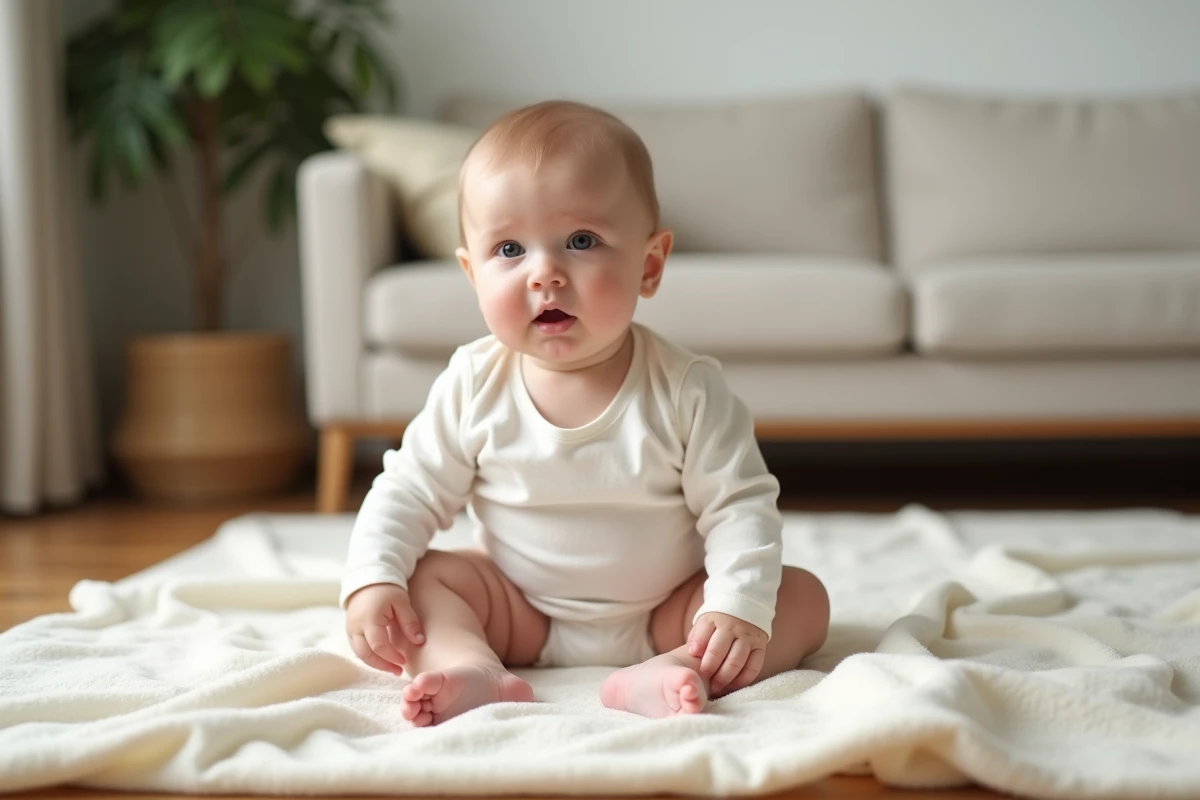
The “newborn” size generates the most waste. Many babies only wear it for a few days, sometimes not at all if their size exceeds the average at birth. Several recent recommendations advise to directly prioritize the 1-month size, or even 3 months, based on the weight estimate made during the last trimester of pregnancy.
Field reports vary on this point. Some parents report that their child wore the newborn size for three to four weeks. Others describe a direct transition to 1 month right from the maternity ward. Birth weight, growth rate in the first weeks, and the cut of the clothing explain these discrepancies.
A strategy to limit unnecessary pieces
Rather than buying a complete layette in newborn size, it’s better to plan for a minimum of bodysuits and pajamas in this size, then supplement with 1-month size. A bodysuit that is slightly too big does not pose a comfort issue for an infant, as long as the neckline is not too wide.
- Plan for two to three bodysuits and two pajamas in newborn size, no more, especially if the ultrasound indicates a baby of average or larger size.
- Have a larger stock in 1-month size (five to six pieces), as this size is generally worn longer.
- Keep the labels and packaging of clothes bought in advance to be able to exchange sizes after birth.
Baby growth between 0 and 12 months: when to change clothing size
The growth of an infant does not follow a linear rhythm. The first weeks are marked by rapid growth spurts, then the pace gradually slows. Sizes change more quickly between 0 and 6 months than between 6 and 12 months, which has a direct impact on the duration of wear for each size.
During the first three months, a baby may change size every three to six weeks. From the sixth month onwards, the same size may last two months or more. This initial acceleration explains why small sizes accumulate so quickly in drawers.
Signals that indicate it’s time to move to the next size
Observing the clothing on the baby provides more information than any size chart. A pajama with snaps at the crotch that pulls, a bodysuit that rides up above the navel, or sleeves that stop halfway down the forearm are all concrete indicators.
- Snaps or buttons are difficult to close without forcing: the garment is too small in width.
- The feet of the pajamas compress the toes or force the baby to fold their legs: the length is insufficient.
- The fabric leaves marks on the skin at the thighs, belly, or wrists: the garment restricts movement.
- Choosing the next size up in case of doubt remains the most common recommendation, as ease of movement takes precedence over aesthetic fit.
Choosing baby clothes wisely: pajamas, bodysuits, and pieces to prioritize
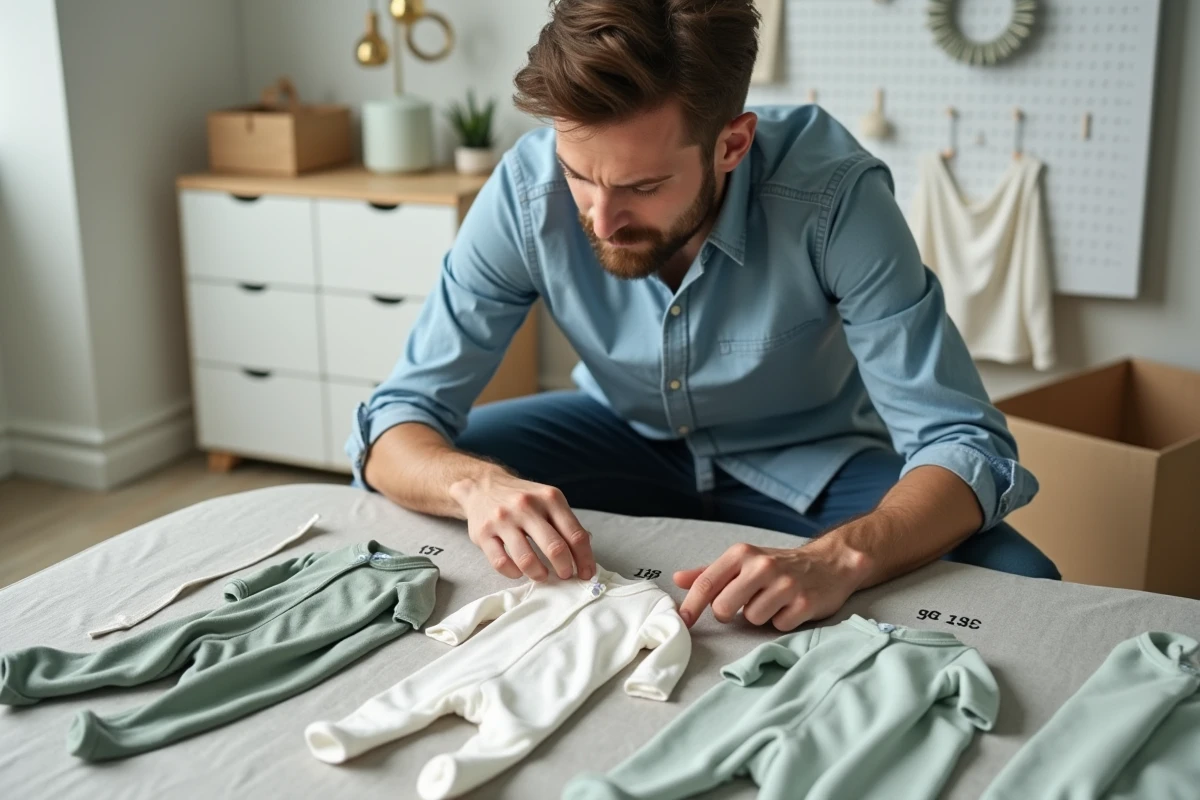
In the first months, a newborn’s wardrobe is based on two categories: bodysuits and pajamas. These two types of clothing cover most needs, day and night. A cross-over bodysuit makes dressing a newborn who cannot yet hold their head easier.
Natural materials like cotton are still the most recommended for the fragile skin of babies. The fabric weight should be dense enough to withstand frequent washes without deforming, which directly affects the garment’s lifespan.
Adjusting the number of pieces to the growth rate
Buying in limited quantities for each size and supplementing gradually helps avoid accumulation. For the most ephemeral sizes (newborn and 1 month), a few pieces are sufficient. From the 3-month size onward, which is generally worn longer on average, a slightly larger stock is justified.
Second-hand clothes represent a coherent option for small sizes, precisely because they have been worn little. A newborn size bodysuit used for two weeks by an older child remains in excellent condition.
The question of how long a baby wears their clothes depends primarily on their individual growth curve. No chart replaces direct observation: taking the infant’s measurements, checking the ease of movement in the garment, and buying gradually remains the most reliable method to avoid sizes left at the back of the closet.