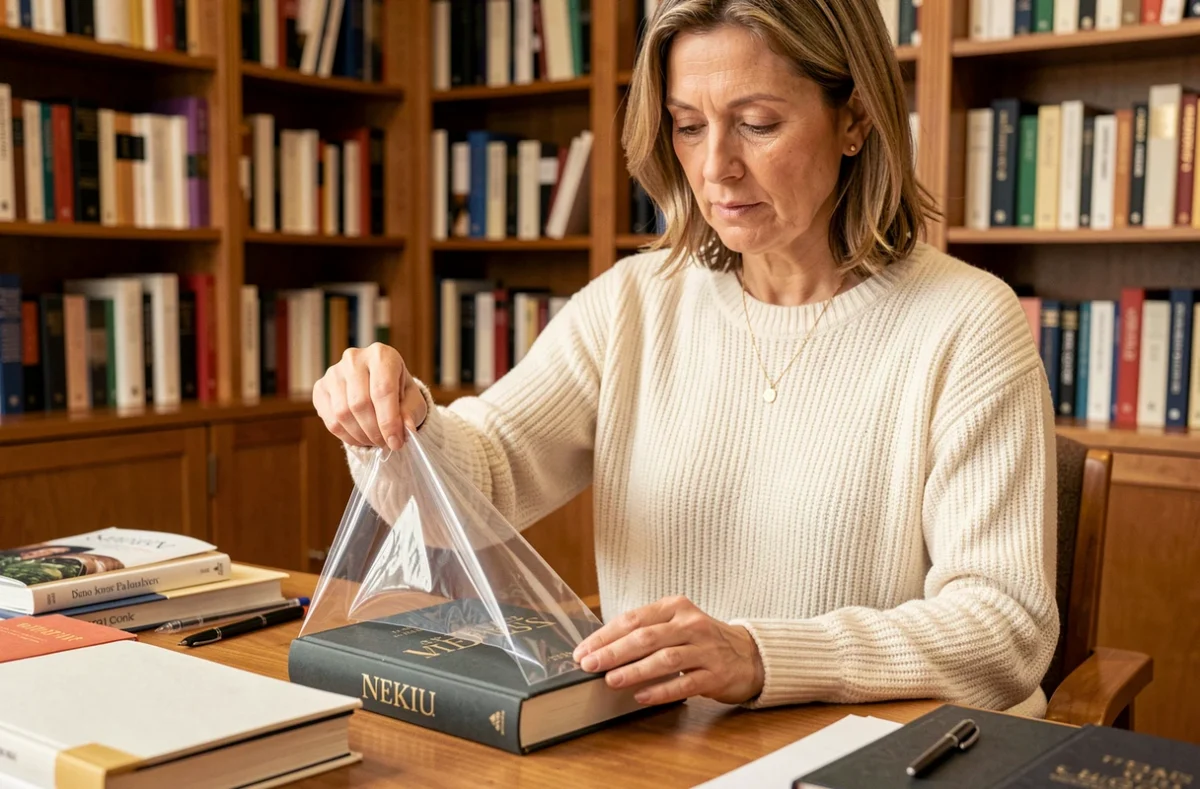
A book lying flat in a bag, wedged between a water bottle and a set of keys: after a few trips, the spine warps, the back cracks, and the signatures begin to separate. The spine is the most exposed area of a book because it bears the mechanical stresses of the binding and is rarely protected by the cover alone. Preserving this part requires precise actions and suitable materials, not just common sense.
Protective materials for the spine: what works and what to avoid
The market offers so-called “book protection tapes,” self-adhesive plastic films, and fabric bands. Not all are equal, and some worsen damage over the long term.
The starting point is the composition of the film or tape. Polyester, polyethylene, and polypropylene without additives are the recommended materials for prolonged contact with paper and binding. PVC, on the other hand, releases acids over time. It yellows the spine, weakens the glue, and can stick to the inner signatures.
There are also reinforcing adhesive strips (like wide transparent tape) sold in stationery stores. They can help for a school textbook you want to last a year, but for a book you care about, the adhesive residue eventually marks the cloth or cardboard cover. When looking for book spine preservation tips, the rule is simple: anything that sticks directly to the binding should be avoided for long-term storage.
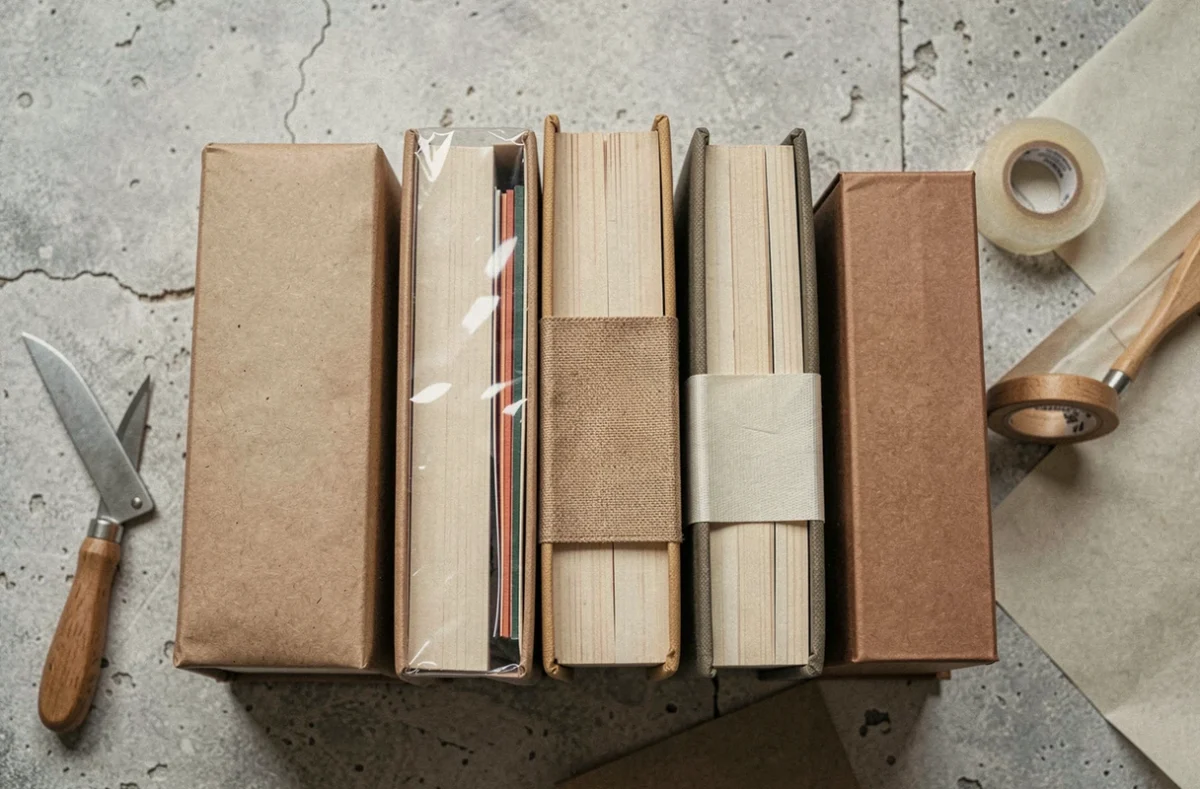
- Non-acidic polypropylene films: flexible, repositionable, compatible with glued and sewn bindings.
- Neutral cotton fabric bands: to tie or fix with a flap, suitable for thick paperback formats.
- Non-acidic rigid cardboard cases: protect the spine and covers simultaneously, ideal for old or valuable books.
Vertical storage and mechanical stress on the binding
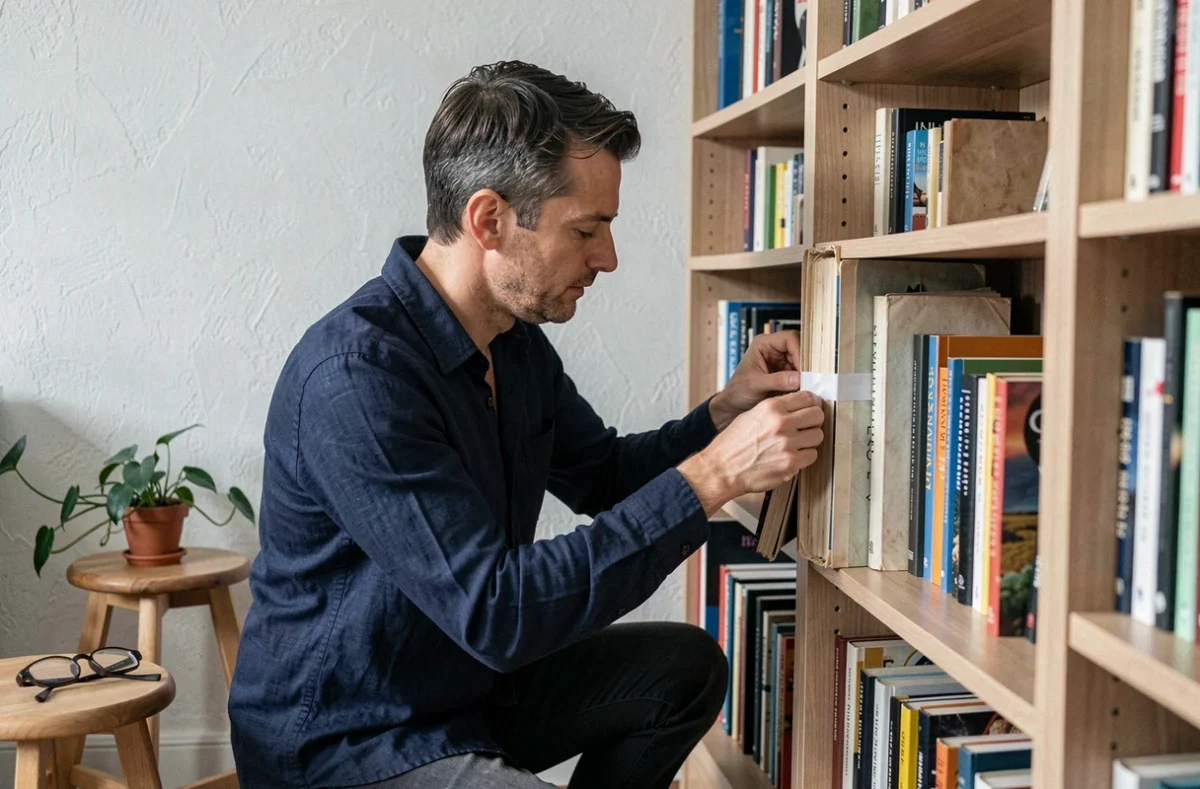
The spine doesn’t only get damaged during transport. A book poorly supported on a shelf undergoes slow but constant deformation. When a book leans due to a lack of neighboring volumes to support it, gravity pulls on the spine. The signatures slide down, the top cap detaches, and the spine hollows out.
A book must be kept upright, snugly but not excessively, between two volumes of comparable size. If the shelf isn’t full, use a bookend to prevent tilting. Opinions vary on this point, but overly tight packing can also compress the spine and mark the cover cloth.
The case of large formats and heavy books
Books beyond a certain weight (coffee table books, atlases, encyclopedias) cannot withstand prolonged vertical storage. The mass of the block of pages deforms the binding through tension. They should be stored flat, stacked three or four high at most, ensuring that the spines remain accessible and not compressed against a wall.
For these formats, a non-acidic rigid cardboard case is the most effective protection. It distributes pressure, prevents dust from infiltrating the spine, and limits friction between the covers.
Humidity and temperature: protecting the spine from the environment
The spine of a book is the main entry point for ambient moisture. The signatures, exposed on this face, absorb the water present in the air. The binding glue softens, the paper warps, and mold may appear between the pages.
The stability of the environment matters more than an isolated ideal value. A book stored in a room with fluctuating temperature and humidity (garage, attic, basement) deteriorates much faster than a book kept in a modest but stable room. Avoid exterior walls, radiators, pipes, and bare concrete floors.
The trap of the airtight container
Storing a book in a sealed plastic bag seems logical to protect it from moisture. It is often counterproductive. A closed container traps residual moisture against the spine and covers. If the book is not perfectly dry at the time of storage, the water remains trapped and accelerates deterioration.
The solution: boxes or cases that limit dust and pests while allowing a minimum of air circulation. Conservation boxes with unsealed lids fulfill this role.
Reacting when the spine is already damaged: stabilize before repairing
A book whose spine has gotten wet or whose back is peeling requires a measured intervention. The common reflex, forcing it open to check the condition of the pages or using a hairdryer on the damp back, systematically worsens the damage.
- Support the volume from below with a rigid support to prevent the block of pages from detaching further.
- Do not separate pages that are stuck together: wet paper tears at the slightest effort.
- Avoid any concentrated heat source (hairdryer, radiator, direct sunlight) that contracts the glue and deforms the cardboard.
- Freezing can serve as a temporary measure for a very wet book while organizing controlled drying.
The priority is to stabilize the book, not to repair it immediately. A wet book lying flat, slightly open in a ventilated room at a stable temperature, has a good chance of regaining a functional spine without heavy intervention.
For old bindings or valuable books with a detached back, a visit to a bookbinder-restorer remains the only reliable option. Re-gluing it yourself with inappropriate glue (like thick white PVA glue) stiffens the back and prevents the book from opening properly.
Protecting a book’s spine is primarily about choosing the right materials in contact with the paper, maintaining a stable environment, and resisting the urge to enclose or heat a fragile book. These actions take little time, but they make the difference between a book that lasts for decades and one that falls apart after a few years.