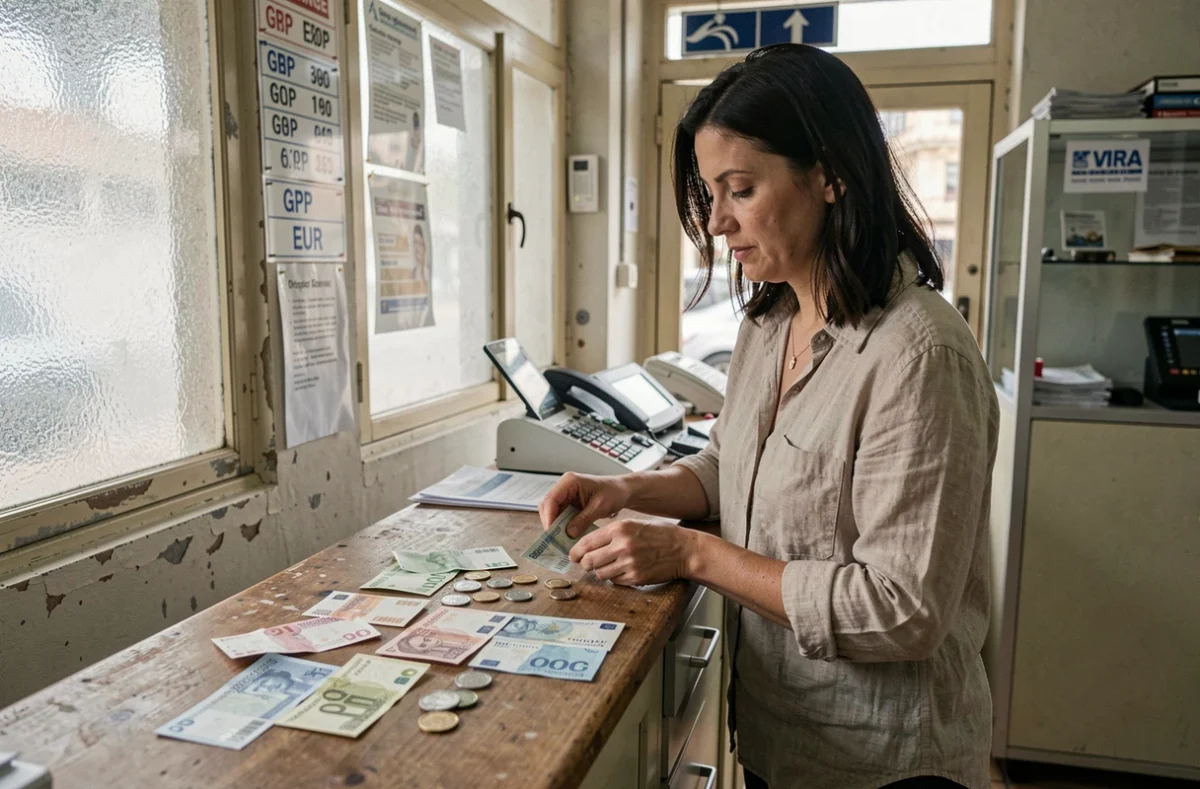
Gibraltar officially uses the Gibraltar pound (GIP), pegged to the British pound sterling at a strict parity of 1 GIP = 1 GBP. Euros circulate in some tourist shops, the pound sterling is accepted everywhere, and ATMs dispense GIP. For a traveler arriving from Spain, three currencies coexist in an area of just a few square kilometers. Understanding which one to prioritize, and under what conditions, helps avoid sometimes significant losses in currency exchange.
Gibraltar pound, pound sterling, and euro: comparative table of accepted currencies
| Currency | Code | Local Acceptance | Change Given | Reusable After Stay |
|---|---|---|---|---|
| Gibraltar pound | GIP | Everywhere (official currency) | In GIP | Difficult outside the territory |
| Pound sterling | GBP | Everywhere (1:1 parity with GIP) | Often in GIP | Yes, in the UK |
| Euro | EUR | Tourist areas only | Rarely in euros | Yes, in the eurozone |
This table summarizes the situation as it presents itself on a daily basis. The pound sterling and the GIP are interchangeable in almost all transactions. The euro, however, occupies a more ambiguous position.
Travelers who wish to delve deeper into the currency issue in Gibraltar can learn more on Actualités Voyages, which details the payment options available in the territory.
Payment in euros in Gibraltar: the hidden cost of the merchant rate
The immediate proximity to Spain leads many visitors to use their euros directly in Gibraltar’s shops and restaurants. Some businesses located on Main Street or near the border display prices in euros to facilitate purchases.
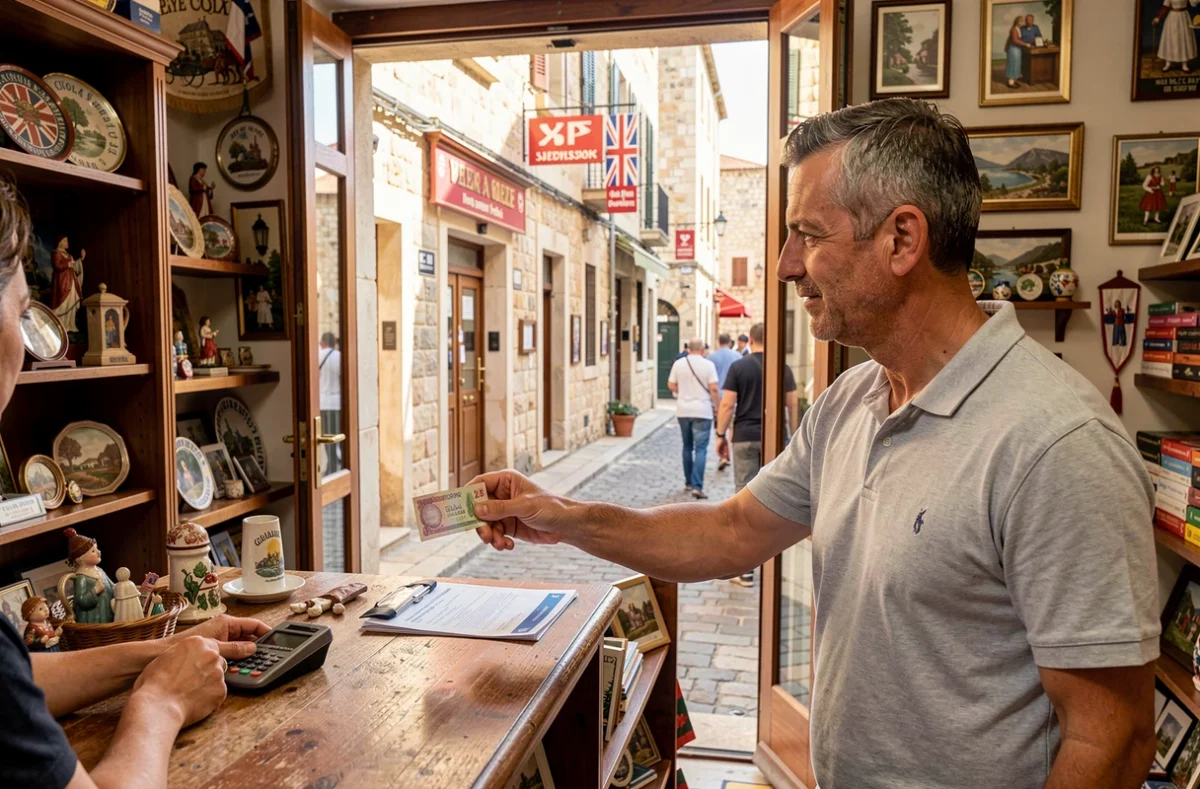
The problem lies in the conversion rate applied. The rate charged by merchants is often less favorable than the interbank rate or that of your card issuer. The merchant sets their own margin, with no obligation for transparency regarding the difference from the actual rate.
In practical terms, paying for a meal in euros at a Gibraltar restaurant costs more than letting your bank convert the GBP/GIP transaction to EUR. The difference may seem modest on a single purchase, but it accumulates over the duration of a stay.
Dynamic currency conversion: the trap to avoid at the payment terminal
When you pay by card, the terminal may offer to charge directly in euros rather than in pounds. This option, called dynamic currency conversion (DCC), applies a rate set by the terminal operator. Refusing the conversion and paying in local currency is almost always more advantageous.
By choosing to pay in GIP or GBP, you allow your own bank (or your multi-currency card) to handle the conversion, usually at a rate closer to the actual market rate.
ATMs in Gibraltar: which currency is actually dispensed
A point rarely mentioned in standard guides concerns withdrawals at ATMs. Gibraltar’s ATMs generally dispense Gibraltar pounds, not euros or British pounds. This distinction has direct practical consequences.
- GIP notes have the same face value as GBP notes, but they are not accepted in the UK by machines or by all British businesses. Retrieving GIP at the end of your trip complicates their reuse.
- Withdrawing small amounts rather than a large sum helps avoid leaving with unusable GIP notes. Not keeping cash in GIP at the end of your stay remains the most pragmatic recommendation.
- Some ATMs offer conversion to euros at the time of withdrawal, with an unfavorable rate. As with card payments, it’s better to withdraw in local currency and let your bank manage the conversion.
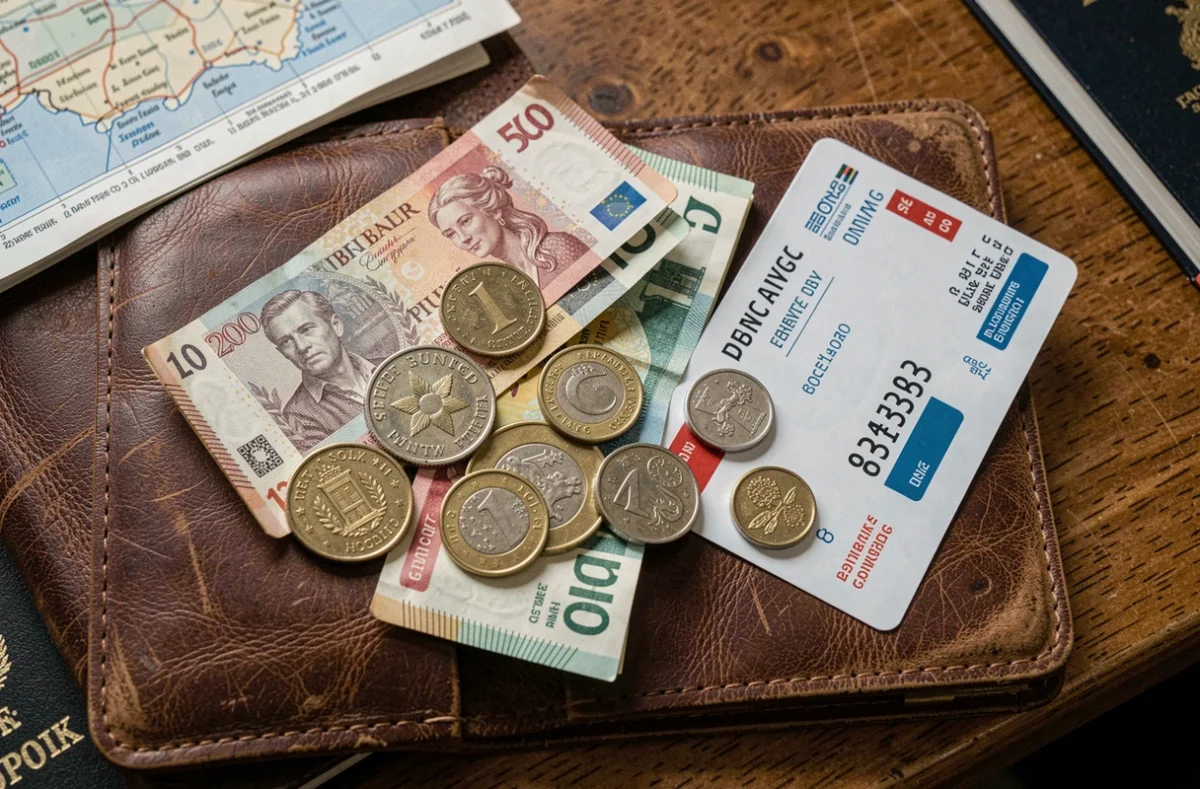
Contactless and debit card: the most economical payment method on the rock
Contactless payment works widely in Gibraltar, both in shops and in transportation. Major international cards (Visa, Mastercard) are accepted in almost all establishments.
For a traveler coming from Spain or France, the local currency debit card eliminates the issue of manual exchange. The rate applied depends on your issuer, but it remains in most cases more competitive than cash exchange or payment in euros at a merchant.
Multi-currency card or standard debit card
Multi-currency cards (like Wise, Revolut, or N26) allow you to load a balance in pounds before the trip. Since the GIP is pegged at parity to the GBP, a balance in pounds avoids any exchange fees at the time of payment.
With a standard French debit card, the transaction is converted from EUR to GBP/GIP by your bank. Exchange fees (usually a percentage of the amount) and sometimes a fixed fee apply. Checking the terms of your card before departure helps anticipate these costs.
- Multi-currency card with GBP balance: no conversion fees at the time of payment
- Standard eurozone debit card: variable exchange fees depending on the bank, often a few percent
- Cash in euros: unfavorable merchant rate, change given in GIP
Gibraltar concentrates three currencies that coexist without being equal in a tiny territory. The Gibraltar pound remains the reference currency for local transactions, and paying in GIP or GBP with a card remains the least costly choice. Euros, despite their partial acceptance, systematically generate a loss in exchange that the traveler bears the cost of.