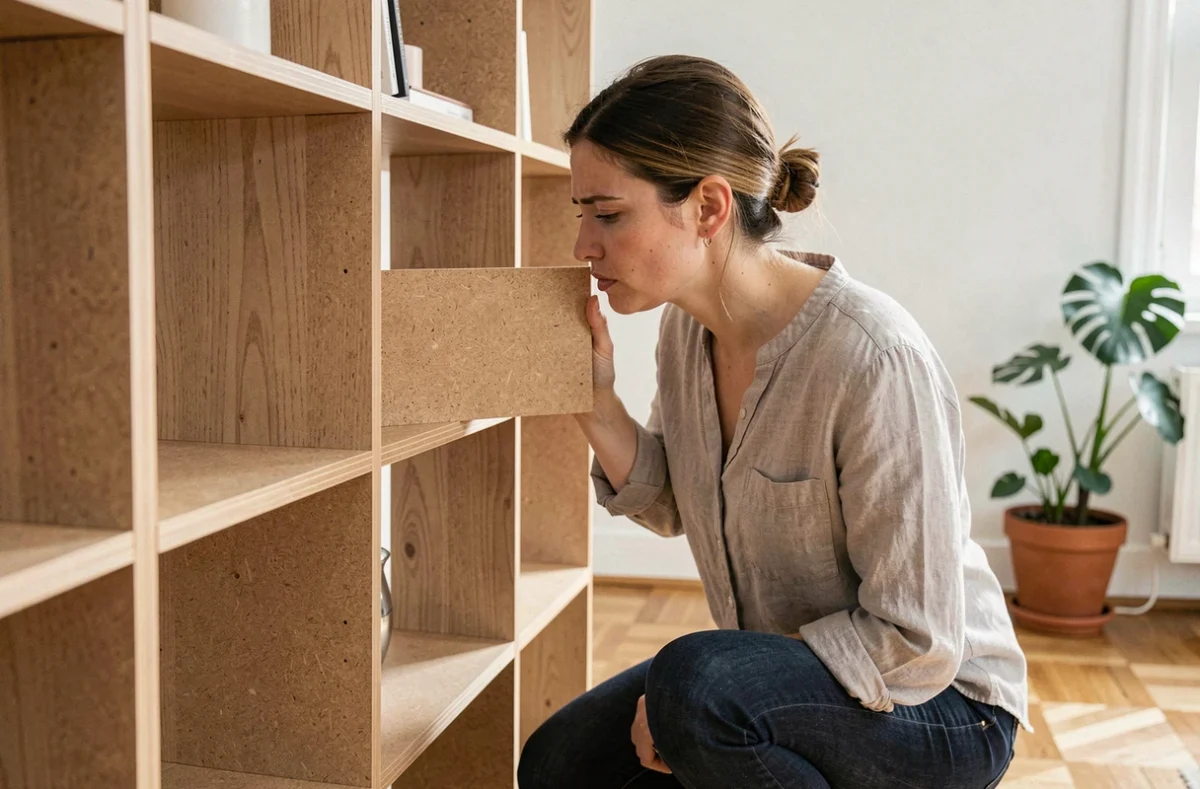
We unpack an Ikea piece of furniture in the living room, we screw in the last shelves, and a sharp odor fills the room. This is not a manufacturing defect. The particle boards, melamines, and adhesives used in most flat-pack furniture release volatile organic compounds (VOCs), including formaldehyde. This phenomenon is normal, but it deserves attention right from the unpacking rather than enduring the smell for weeks.
Formaldehyde and VOCs in Ikea furniture: what European regulations say
The REACH regulation 2023/1464 imposes a formaldehyde emission limit of 0.062 mg/m³ for wood-based furniture and products sold in the European Union under specified testing conditions. An Ikea piece of furniture that complies with this standard remains below a health threshold, but meeting the regulatory limit does not eliminate the odor.
One might think that the French A+ labeling (the one seen on paint cans) allows for comparing two pieces of furniture. In practice, this classification mainly concerns construction and decoration products. The obligation to label emissions for furniture remains incompletely applicable due to the lack of a text specifying its modalities. Therefore, it is impossible to rely on a simple A+ class to choose a Malm dresser over a Kallax.
This regulatory ambiguity explains why one can buy two Ikea pieces from the same range and notice very different odor levels. The exact composition of the panels, the type of adhesive, and the finishes vary depending on the production plants. To avoid bad odors from an Ikea piece of furniture, one must act on ventilation and absorption from day one.
Ventilating a new Ikea piece of furniture: practical method from unpacking
The peak emission of VOCs occurs in the first hours after unpacking. Waiting for the furniture to be assembled and installed in a closed room to react means losing the most effective window of action.
Unpack and pre-ventilate before assembly
If you have a garage, a covered balcony, or a well-ventilated room, place the panels flat, out of their plastic packaging, for several hours before starting assembly. Letting the panels breathe before assembly significantly reduces the final odor. Each side of the panel must be exposed to open air, not stacked against a wall.
During and after assembly
Assemble the furniture with the windows wide open, ideally with a cross breeze. Once assembled, leave all doors, drawers, and compartments open. A fan directed towards the furniture speeds up air circulation around the emitting surfaces.
A point not to be overlooked: never turn off the mechanical ventilation to conserve heat during ventilation. Mechanical ventilation ensures a continuous evacuation of air laden with pollutants. Air inlets must remain clear, and vents clean.
Absorbing residual odors: products and techniques that work
After a few days of ventilation, a residual odor may persist, especially on closed furniture (wardrobes, storage boxes). We then move on to active absorption.
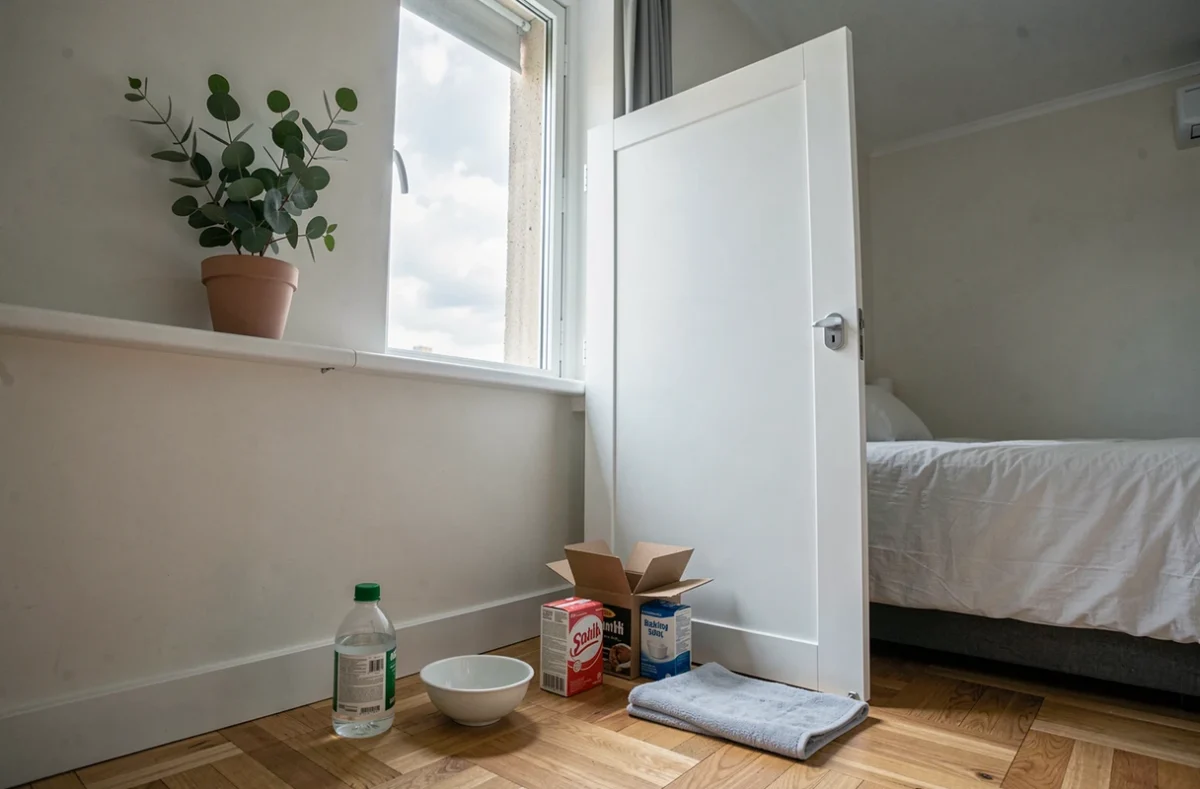
- Baking soda in an open dish inside the furniture captures odor molecules. Renew every two weeks as long as the odor persists.
- Activated charcoal (in bags or pieces) works on the same principle with a broader absorption capacity for VOCs. Place it in each closed compartment.
- Diluted white vinegar, applied with a cloth on non-visible interior surfaces, neutralizes some of the emissions. Let dry with doors open.
- Dry coffee grounds, placed in a dish, absorb persistent odors in closed drawers and shelves.
Feedback varies on the comparative effectiveness of these methods: activated charcoal seems more effective on VOCs than baking soda, but the latter remains more accessible. Combining both in a piece of furniture with multiple compartments covers a broader spectrum.

Common mistakes that worsen the odor of an Ikea piece of furniture
Some common reflexes prolong the problem instead of solving it.
Placing a new piece of furniture in a bedroom without prior ventilation exposes one to a higher concentration of VOCs during the night when the windows are closed and the room is poorly ventilated. A new piece of furniture has no place in a closed bedroom during the first week.
Masking the odor with an air freshener or scented candle does not remove anything from the air. It layers chemical compounds on top of others, which can further degrade indoor air quality. The nose gets used to it, but the emissions remain.
Varnishing or painting the interior surfaces of melamine furniture to “seal” the VOCs is counterproductive if the product used itself emits volatile substances. If you want to apply a surface treatment, choose a product labeled A+ in emissions and wait until the furniture has already been ventilated for several days.
Special case of Ikea furniture in a child’s room
Children spend more time in their room than adults, often with the door closed. Their respiratory system is also more sensitive to irritants. For furniture intended for a child’s room, extend the pre-ventilation period: assemble the furniture in another ventilated room and only install it in the bedroom after several days, when the odor perceptible to the nose has disappeared.
Also check that the mechanical ventilation in the room is functioning properly (extraction vent unobstructed, air inlet above the window clear). A persistent odor after about ten days of ventilation justifies contacting Ikea customer service to report the problem.
Solid wood furniture (like the Hemnes range, for example) generally emits fewer VOCs than melamine particle boards, but they are not odor-free either. The same ventilation and absorption actions apply, simply often with a shorter duration.