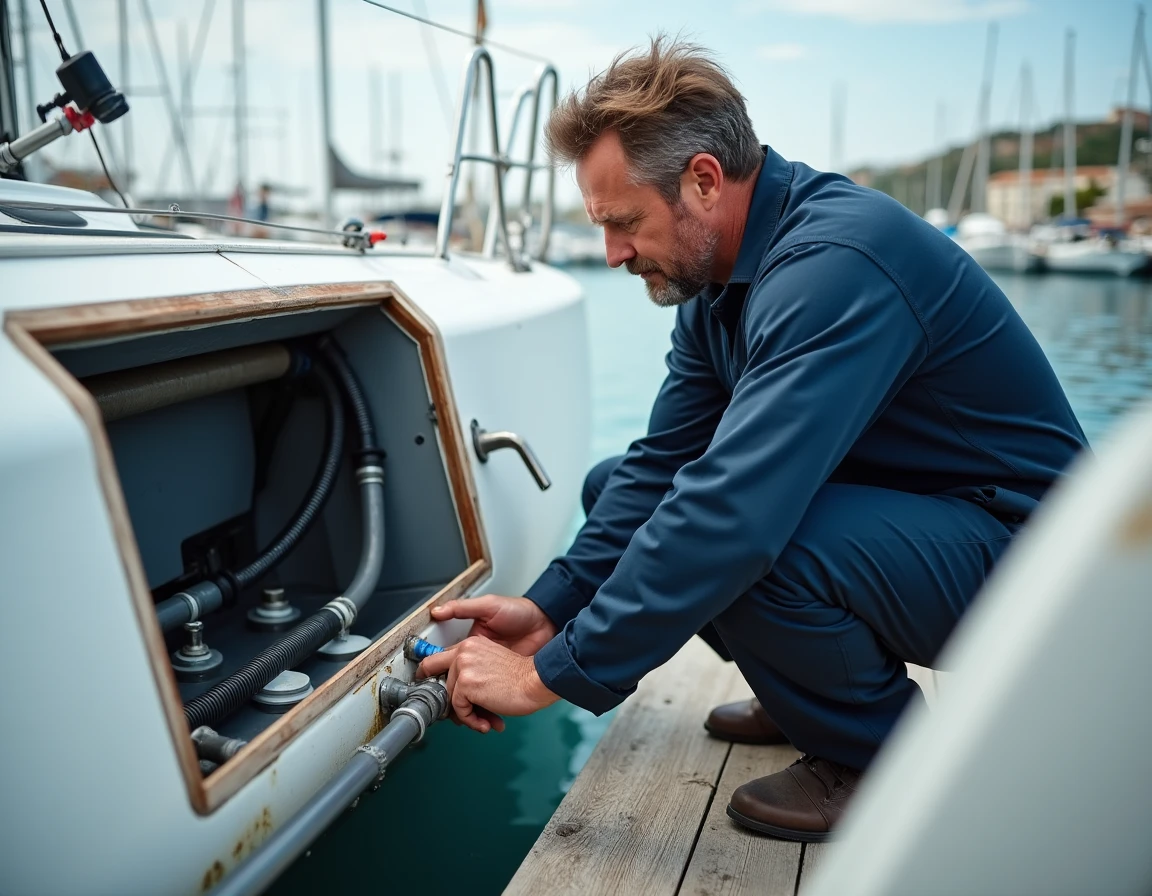
On a pleasure boat, marine toilets, the shower, and the kitchen sink generate two streams of effluents with radically different technical and regulatory constraints. The collection, storage, and discharge circuit of wastewater determines the autonomy of the vessel, the choice of sanitary equipment, and compliance during port inspections.
Sizing of the black water retention tank: the weak link of the installations
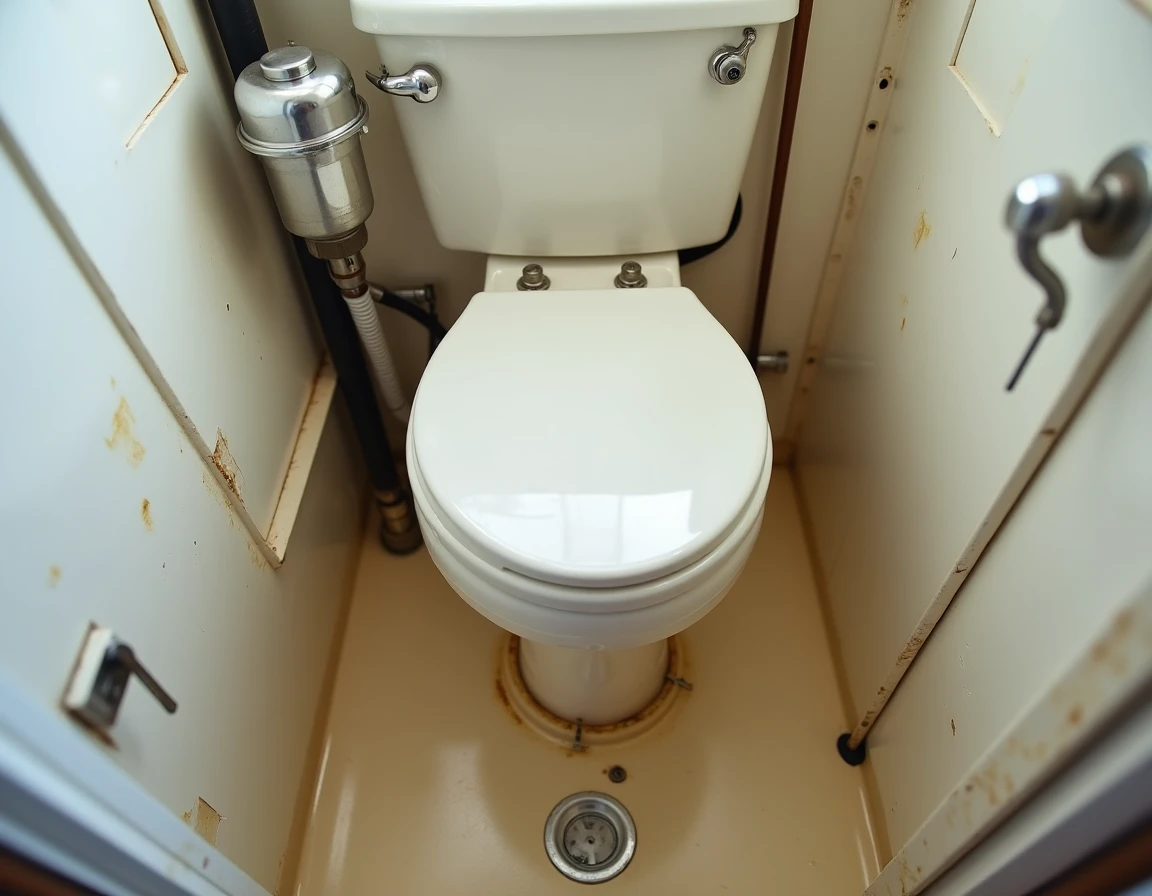
The retention tank remains the critical link in the sanitary circuit on board. On the majority of production sailboats and motorboats, the black water tank rarely exceeds a few dozen liters, limiting autonomy to a few days for a crew of two to four people.
The problem is not just about volume. The positioning of the tank in the hull determines the efficiency of pumping, particularly the ability to empty the tank completely without leaving any residue. A poorly designed tank bottom, with an outlet fitting placed too high, creates a dead volume that ferments and generates persistent odors despite chemical treatments.
We recommend checking three parameters when purchasing or retrofitting:
- The diameter of the pumping fitting (ideally the same as that of the port terminals to avoid leaking adapters)
- The presence of a properly sized vent, without a right-angle bend, to avoid overpressure during filling
- Physical access to the tank for annual interior cleaning, often impossible on original installations
To understand precisely where the excrement goes in boats, one must follow the complete path from the toilet bowl to the pumping terminal at the dock or, in some cases, to the authorized discharge offshore.
Discharge of black water at sea: regulatory thresholds and reality of control
The discharge of untreated black water is prohibited near the coast. The affected coastal strip varies according to navigation areas and local regulations. Beyond this strip, discharge remains subject to conditions: the boat must be underway, at a sufficient speed to ensure dispersion.
In practice, compliance checks at sea for sanitary installations remain infrequent on small pleasure craft. This situation explains why some boaters continue to discharge directly, via a hull valve left open. The direct discharge valve (sea cock) is, in fact, a point of vigilance during compliance inspections: on new boats, it must be physically sealed or absent in areas where discharge is prohibited.
Gray water (shower, sink, dishes) follows a separate circuit. It contains detergents, food fats, and organic residues. Direct discharge overboard is tolerated in most offshore navigation areas, but more and more ports and organized anchorages are imposing separate collection.
Onboard wastewater treatment: miniature treatment plant on board
Onboard treatment systems replicate on a small scale the principle of a biological wastewater treatment plant. An aerobic reactor degrades organic matter using bacteria, and then the treated effluent is discharged into the sea after disinfection (chlorination or UV).
These systems remain marginal on standard-sized pleasure boats. Their bulk, electrical consumption, and maintenance costs reserve them for larger units or vessels in permanent navigation. The biological filter requires a regular supply of effluents to maintain the active bacterial colony, which poses a problem on a boat used only on weekends.
Dry toilets with separation are becoming an increasingly visible alternative in boating. They eliminate the need for a black water tank and a discharge pump. The composted solid substrate is disposed of on land in a bag. This solution eliminates odors related to anaerobic fermentation in traditional tanks, but it involves manual management that not all crews accept.
Port infrastructure for collection: the bottleneck
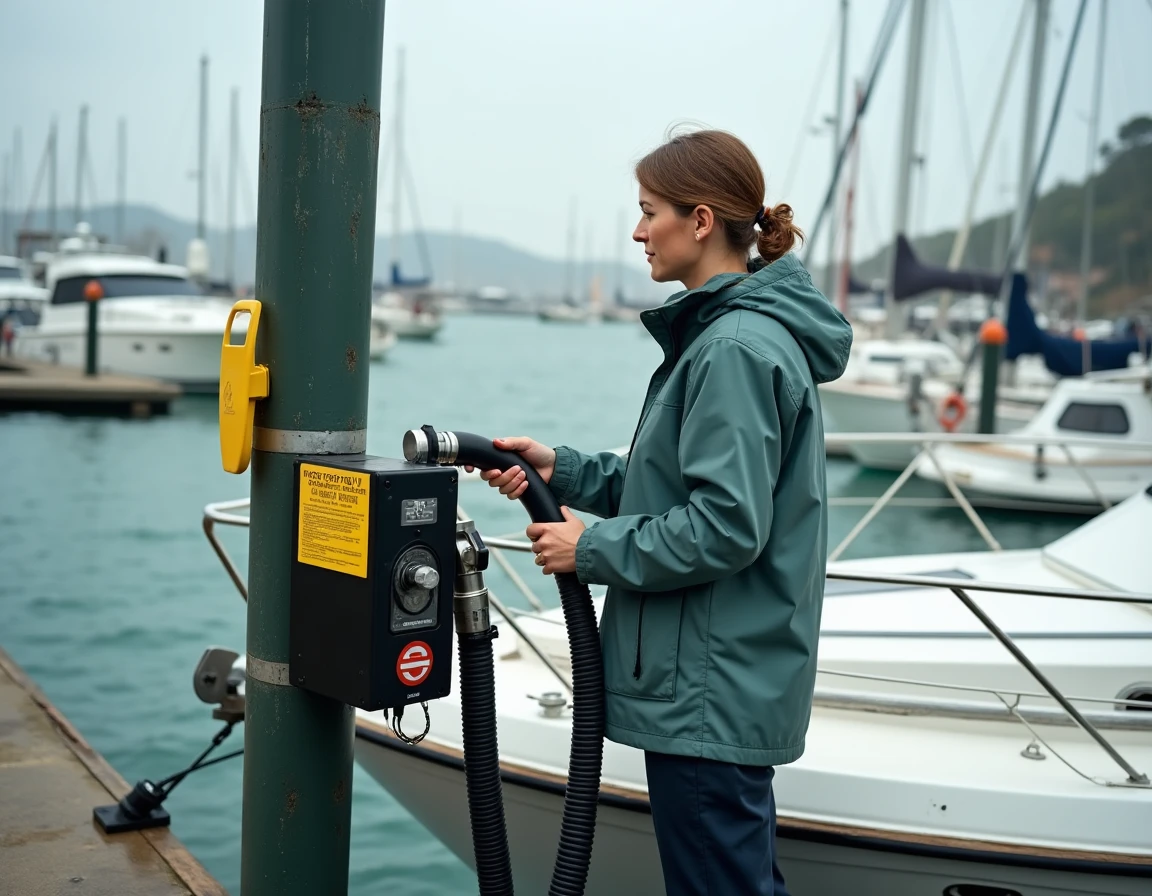
The underlying trend in recent boating is the expansion of port services dedicated to the treatment and recycling of wastewater. Ports and communities are investing in fixed pumping terminals or mobile collection units. Narbonne, for example, has established a specific treatment station for pleasure craft effluents.
The operational problem remains the usage rate of these terminals. Many pumping installations are underutilized because they are poorly marked, out of service due to lack of maintenance, or incompatible with the fittings of onboard tanks. A boater arriving at the port after a night crossing will not search for a pumping terminal that is unfindable on the port map.
We observe that the best-equipped ports integrate black water pumping directly into the welcome circuit, alongside fresh water and electricity at the dock. This approach eliminates the voluntary effort and mechanically increases the collection rate.
Maintenance of the sanitary circuit: common mistakes and best practices
The sanitary circuit of a pleasure boat consists of flexible hoses, valves, a pump (manual or electric), and the tank. Each element ages differently.
- Non-reinforced flexible hoses become porous after a few seasons and allow odors to pass through their walls, even without visible leaks. Replacing them with specific marine sanitary hose (smooth inner wall, odor-resistant) is the only sustainable solution
- The macerator pump, when it exists, should be rinsed with fresh water after each prolonged use to avoid clogging from limescale deposits
- Treatment chemicals for the tank (formaldehyde, enzymes) do not replace mechanical rinsing. An annual cleaning with high-pressure water remains the most reliable method to avoid the accumulation of solid deposits
The most common mistake is using standard toilet paper, which does not disintegrate in the circuit and ends up clogging the pump or the tank outlet fitting. Only specific marine soluble paper decomposes quickly enough to avoid blockages.
Managing wastewater on board is not glamorous, but it directly affects the comfort of navigation and the preservation of anchorage areas. A well-sized circuit, maintained each season and systematically emptied at the dock, transforms a sanitary constraint into a seamless routine for the crew.